
Galvanized Sow Farrowing Crate
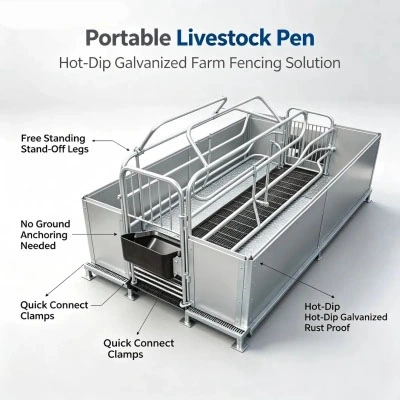
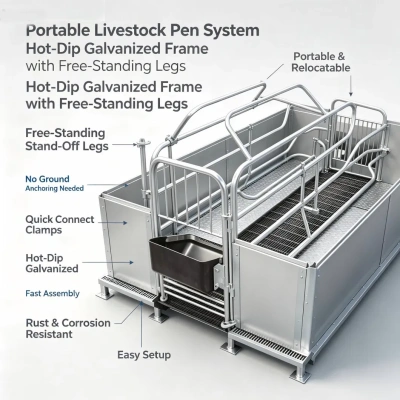
The galvanized sow farrowing crate is the working center of the farrowing room: it gives the sow a defined lying and standing zone while keeping piglet areas open around her. Around the crate, the pen assembles from piglet protection rails, a heated creep area, feeder, drinker, and slatted flooring over a manure system.
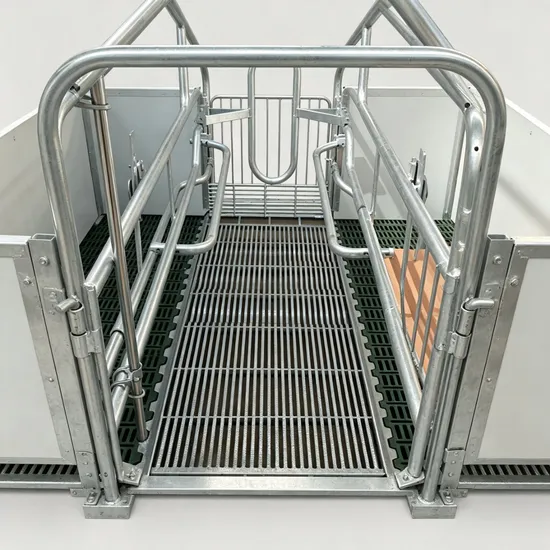
Configured per farm: crate dimensions follow the sow line, and the layout adapts to your farrowing room dimensions, management practice, and local welfare requirements.
The Complete Pen
| Component | Function |
|---|---|
| Sow crate | Galvanized steel frame; defines the sow’s lying and standing zone |
| Piglet protection rails | Keep the sow off the piglet resting zones along both sides |
| Creep area | Heated corner — heat lamp or heat pad — where piglets rest between nursings |
| Sow feeder | 304 stainless steel trough, flip-over design — the trough tilts out for wash-down between litters |
| Piglet feeder / drinker | Single-sided trough in the creep zone — feed opens to the piglet side only, keeping feed off the aisle side and reducing soiling |
| Sow drinker | Bowl drinker for the sow — less spillage than a nipple into the lying zone; stainless steel drinker for piglets |
| Slatted flooring | Plastic slats in the piglet zones; plastic or cast iron under the sow — over a pit or manure channel |
| Manure handling | Slats pass waste to the pit or scraper/flushing system below |
Every component is available together as one pen or separately — farms upgrading an existing room often keep flooring and replace crates and rails.
Why the Crate Exists
In open pens, the leading cause of piglet loss in the first days is crushing — the sow lies down or rolls over onto a piglet. The crate limits the sow’s lying zone so she settles along a predictable path, and the piglet zones sit outside that path:
- Sow zone (center): the crate frame sets the lying area — wide enough for the sow to lie and rise freely, narrow enough that she cannot turn around or fully roll.
- Piglet zones (sides): open floor area where piglets nurse, rest, and move — protected by rails that keep the sow’s body off the edges where piglets rest.
- Creep area (front or side): a warm corner with a heat lamp or heat pad that draws piglets away from the sow when not nursing. Piglets choose warmth; the sow zone stays clear.
The first week is when the crate earns its keep — after that, piglets are mobile enough to avoid the sow, and the pen works as a nursery area until weaning.
Dimensions and Sow Fit
The standard pen footprint is 2.4 × 1.8 m — the crate runs 2.4 m along the pen, with the piglet activity zones on both sides within the 1.8 m width. The crate must fit the sow — too narrow and the sow is stressed and lies down restlessly, which increases crushing risk rather than reducing it; too wide and she turns around, defeating the crate.
We review crate size against three inputs:
- Your sow line — breed and typical sow weight set the length and width needed.
- Local welfare requirements — some markets regulate minimum crate dimensions and farrowing-system type; tell us the destination market and we match the system to it.
- Room layout — pen count per room, aisle access, and flooring module sizes.
Flooring Under the Pen
The pen sits on a full slatted floor — no solid bedded area, the entire surface drains to the pit or channel below. The piglet activity zones on both sides are engineering plastic slats — warm underfoot and kind to newborn feet and knees; the slot width is set for newborn safety. Under the sow, the slat specification carries her weight. Slat modules drop onto the support beams, and the crate anchors to the same structure.
- Piglet zones: plastic slats — warm underfoot, small slot widths safe for newborn feet, easy to clean between litters.
- Sow zone: cast iron or heavy plastic — carries the sow’s weight; cast iron is the durable choice under the sow, plastic the warmer one.
The flooring connects to the manure pit or channel below — slat modules drop onto the support beams, and the crate anchors to the same structure. See our plastic slatted floor range for the piglet-zone and nursery applications.
Galvanizing and Corrosion
The farrowing room is the most corrosive environment on a pig farm — warm, humid, and washed down between every litter. The crate frame is galvanized steel . For rooms with aggressive washing regimes, we confirm the coating specification before quoting.
FAQ
Can the farrowing crate be supplied as a complete pen?
Yes — sow crate, piglet protection rails, creep area, feeder, drinker, flooring, heat lamp or pad, and manure handling components as one pen set. Or any subset, for farms upgrading part of an existing room.
Can the dimensions be customized?
Yes. Crate dimensions are reviewed against sow size, room layout, flooring modules, and local requirements before we finalize the drawing.
What flooring does it need?
The standard pen is full slatted: engineering plastic slats in the piglet zones, with the sow-zone slat specification confirmed with the pen layout. The floor drains to the pit or channel below.
How do I know the crate fits my sows?
Tell us your sow breed and average sow weight. Crate too narrow stresses the sow and increases crushing; too wide lets her turn — both defeat the purpose. We size from your herd.
What about welfare regulations in my market?
Farrowing-crate rules differ by country and are changing in some markets. Tell us the destination market and we match the system to its current requirements.
What maintenance does it need?
Wash-down between litters, inspection of adjustment mechanisms and anchor points, and replacement of individual rails or floor sections as they wear. The galvanized frame does not require painting.