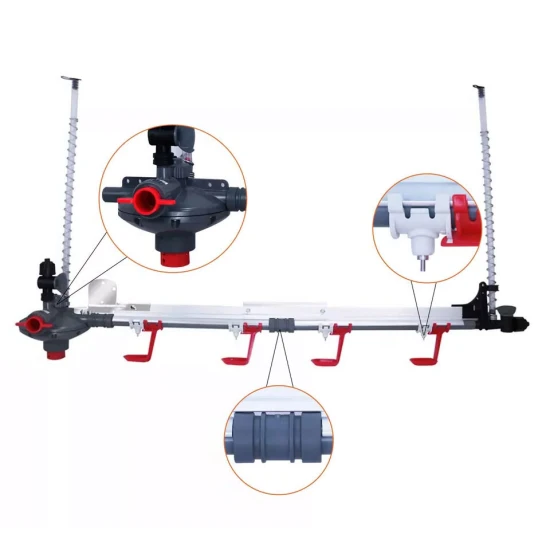
Stainless Steel Poultry Nipple Drinker
Stainless steel nipple drinker for broiler, layer, and breeder houses — conical valve seat for tight sealing at low pressure, optional drip cups, and complete poultry drinking line system supply with regulators, filters, and suspension.
The stainless steel poultry nipple drinker is the watering point of an automatic drinking line. Water is released only when a bird activates the nipple — the supply stays enclosed, and the litter stays drier than with open drinkers.
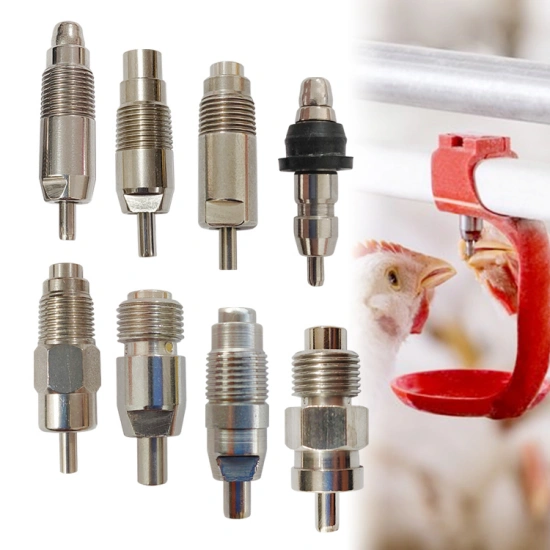
Drinkers mount on square or round water pipes depending on model, on hanging lines that adjust in height as the flock grows. A complete line is configured against bird type, house length, water quality, and installation height.
Key Features
- Stainless steel body and valve components — corrosion resistance in the wet, ammonia-laden house environment.
- Conical valve seat — a defined, secure sealing fit; the valve closes cleanly even at low line pressure.
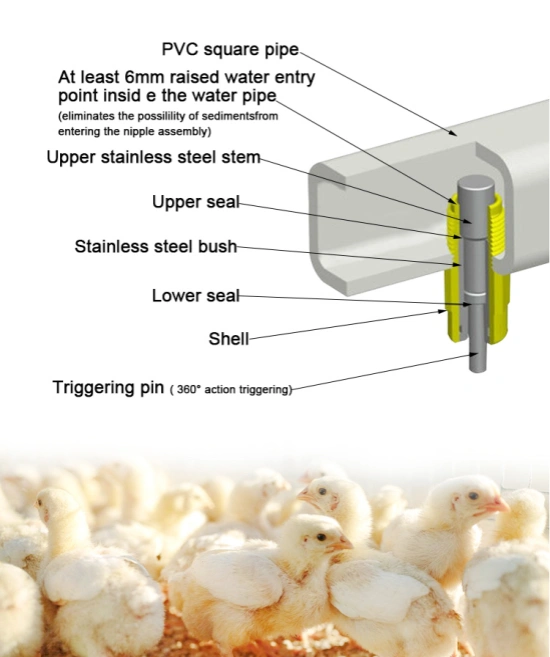
- Integrated sealing — no extra seals at the nipple pipe — fewer parts, fewer leak points, simpler replacement.
- Narrowest water gap at the nipple’s highest point — leakage path is at the top, so gravity works with the seal instead of against it.
- Smooth pipe exterior with no interfering contours — birds activate the nipple from any angle; nothing catches or holds dirt.
- No sensitive bracket parts — the nipple mounts directly to the pipe, with no fragile attachments to break in a working house.
- Optional drip cup — catches activation spillage and keeps it off the litter.
- Suspended line with winch height adjustment — line height follows the flock from day-old to market.
- Complete drinking line supply — regulators, filters, end flush, water meters, pipes, and suspension components quoted as one system.
Technical Specifications
| Item | Specification |
|---|---|
| Body and valve material | Stainless steel — grade confirmed per model |
| Valve seat | Conical, precision sealing |
| Sealing | Integrated — no additional sealing elements at the pipe |
| Pipe compatibility | Square or round water pipe, depending on model |
| Drip cup | Optional |
| Mounting | Direct to water pipe on suspended line |
| Working pressure | Low-pressure drinking line systems — range confirmed per model |
| Flow rate | Set by line pressure and nipple model — confirmed per bird type |
Send us your bird type and house layout and we will confirm the model, flow specification, and line pressure settings for your project.
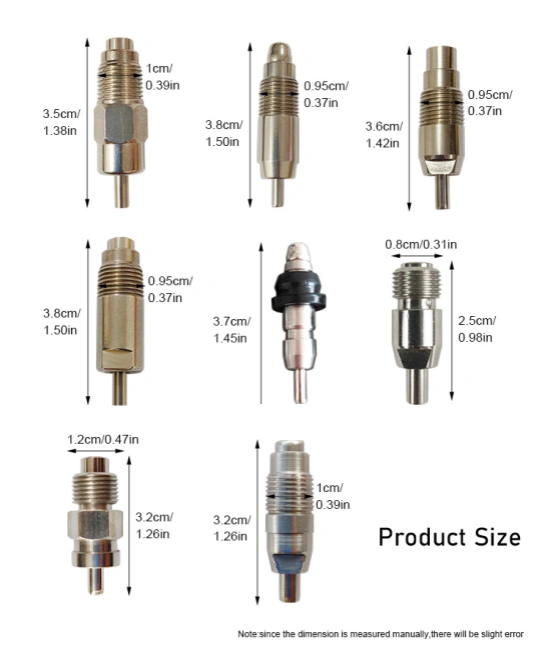
The Complete Drinking Line
The nipple is one component of a line system:
Water Supply → Filter → Pressure Regulator → Water Pipe → Nipple Drinkers (+ Drip Cups) → End Flush
A complete line includes:
- Stainless steel nipple drinkers
- Water pipes — square or round
- Pressure regulator — sets line pressure to bird age
- Filter — protects nipples from sediment in the water supply
- End flush assembly — cleans the line between flocks
- Suspension lines and winches
- Water meter — tracks flock water consumption
Water consumption data from the meter doubles as a flock health signal — a sudden drop in drinking often shows up before a visible health problem.
Valve and Seal Design
Two details decide whether a nipple line runs clean or drips for a full grow-out:
The conical valve seat. The stainless valve closes into a machined conical seat — a defined contact line rather than a face-to-face grind. This is what lets the nipple seal tight at the low pressures used for day-old chicks, when there is barely any system pressure to hold the valve closed.
The integrated pipe seal. No separate sealing elements at the nipple pipe connection. Fewer parts in the wet path means fewer parts to age, clog, or replace — and a smooth exterior with no contours to collect dirt or restrict bird access.
Drip Cups
Drip cups catch the small amount of water released when a bird activates the nipple but does not drink it all. On deep-litter broiler floors this is the difference between dry litter and a wet patch under every drinker line — wet litter drives ammonia and footpad problems. Drip cups are optional and can be specified per line.
Water Pressure and Line Management
Line pressure is set by the regulator and raised as birds grow — low for chicks, higher as intake increases. Stable delivery depends on three line practices:
- Filtration at the line inlet, so sediment does not reach the valve seats
- Regular flushing of the pipe line, especially between flocks
- Nipple inspection on a routine schedule — a slow dripper is found and replaced before it ruins litter
For starting day-old chicks or waterfowl flocks, the automatic bell drinker is the open-water alternative — many farms run both in the first week.
Installation
The drinking line is installed level along the house, at a height adjusted to bird age — birds drink with a slight upward peck, neck straight. Line height is changed by winch as the flock grows. We provide the height/pressure schedule for the confirmed bird type with the line design.
Configuration and Selection
Send us the following and we will confirm the nipple model, pipe specification, line layout, and pressure settings:
- Bird type — broiler, layer, or breeder
- House length and number of lines
- Water source and quality — well, municipal, or treated
- Pipe preference — square or round
- Drip cups — yes or no
- Floor system or cage line
- Destination port
Applications
- Broiler, layer, and breeder houses on automatic drinking lines
- Deep-litter floor systems where litter dryness controls ammonia
- Automated houses converting from open or bell drinkers
- Complete new house projects — drinking line quoted with the feeding line as one package
FAQ
How many birds can one nipple serve?
The count is calculated from bird type, age, nipple flow rate, and your farm’s feeding space standards — broiler, layer, and breeder numbers all differ. Send your house layout and flock plan and we will confirm the nipple quantity and line spacing.
Do you supply a complete drinking line?
Yes — nipple drinkers, water pipes, pressure regulators, filters, end flush assemblies, suspension components, and water meters, quoted as one system.
Nipple drinkers or bell drinkers?
Nipples keep the water enclosed until activated — less spillage, drier litter, lower ammonia, and a better fit for automated houses. Bell drinkers hold open water in a tray and suit younger flocks and simpler setups. We supply both; tell us your house type and flock plan and we will recommend the configuration.
Square pipe or round pipe?
Both are supported depending on nipple model. Square pipe gives a fixed nipple orientation; round pipe rotates freely during installation. Confirm the model against your existing line if this is a retrofit.
Do I need a pressure regulator and filter?
A regulator is required to set line pressure to bird age — chicks drink at very low pressure. A filter protects the valve seats from sediment and is standard practice except on very clean treated supplies. Both are included in our complete line quotation.
How is the line maintained?
Flush the line between flocks through the end flush assembly, keep the inlet filter clean, and inspect nipples on a routine schedule. Replacement nipples mount directly to the pipe with no special tools.
Get a Drinking Line Configuration and Quotation
Send your bird type, house length, and water source and we will come back with the nipple model, line layout, and quotation. Add your destination port for a shipping estimate.
Send us your house layout for a calculated drinking line configuration.