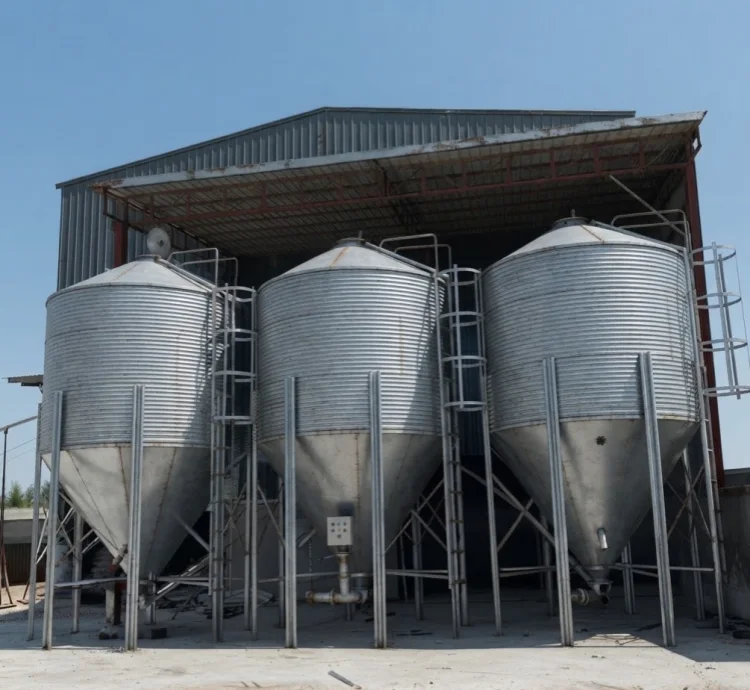
Corrosion-resistant fiberglass feed silos for poultry, pig, and livestock farms — available in capacities from 4 m³ to 100 m³, with non-metallic construction, smooth internal surfaces, and compatibility with automatic feeding systems.
The fiberglass feed silo is designed for dry feed storage in poultry, pig, and livestock production facilities. Its fiberglass-reinforced construction provides an alternative to galvanized steel where moisture, humidity, coastal exposure, or other corrosive farm conditions are a concern.
The silo can be configured with different capacities, support structures, feed outlets, inspection components, and connections for automatic conveying systems. Outlet position and accessories can be matched to the farm layout and downstream feeding line.
Suitable for outdoor farm installation and containerized export projects.
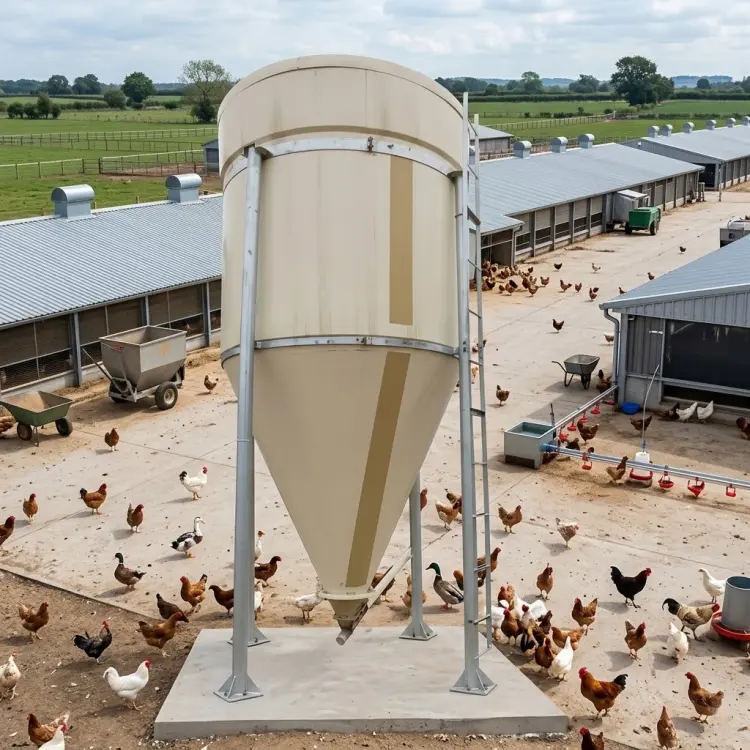
Key Features
- Fiberglass-reinforced construction — non-metallic silo body with high resistance to rust and corrosion.
- Corrosion-resistant for humid farm environments — suitable for high-humidity, coastal, and other corrosion-sensitive locations.
- Smooth internal surface — supports consistent feed discharge and helps reduce material remaining on the silo wall.
- Low thermal conductivity — the fiberglass wall transfers less heat than conventional metal walls, which can help reduce condensation risk under suitable operating conditions.
- UV-resistant exterior finish — gelcoat treatment helps protect the silo body against UV exposure and normal outdoor weather conditions.
- Outdoor installation — suitable for outdoor feed storage when the foundation, support structure, and anchoring are properly designed.
- Automatic feeding compatibility — feed outlets and transition components can be configured for auger or other conveying systems.
- Optional access and monitoring components — inspection port, access ladder, safety cage, and feed level sensor can be supplied.
- Custom configuration — capacity, outlet position, support structure, and accessory set can be reviewed according to the farm project.
Key Specifications
| Item | Specification |
|---|---|
| Capacity | 4 m³ to 100 m³ |
| Approx. Feed Capacity | Approximately 2.5–65 tons, depending on feed bulk density |
| Main Material | Fiberglass-reinforced plastic (FRP) |
| Exterior Finish | Gelcoat finish |
| Silo Body | Fiberglass-reinforced construction |
| Support Structure | Legs or base frame according to capacity and site conditions |
| Feed Outlet | Single or double outlet; position configured according to feeding line |
| Accessories | Inspection port, access ladder, safety cage, feed level sensor |
| Installation | Outdoor installation with suitable foundation and anchoring |
| Shipping | Export packing available for containerized shipment |
Feed capacity in tons varies according to bulk density. Final dimensions, structural specifications, and accessories should be confirmed according to the selected model and project requirements.
Product Overview
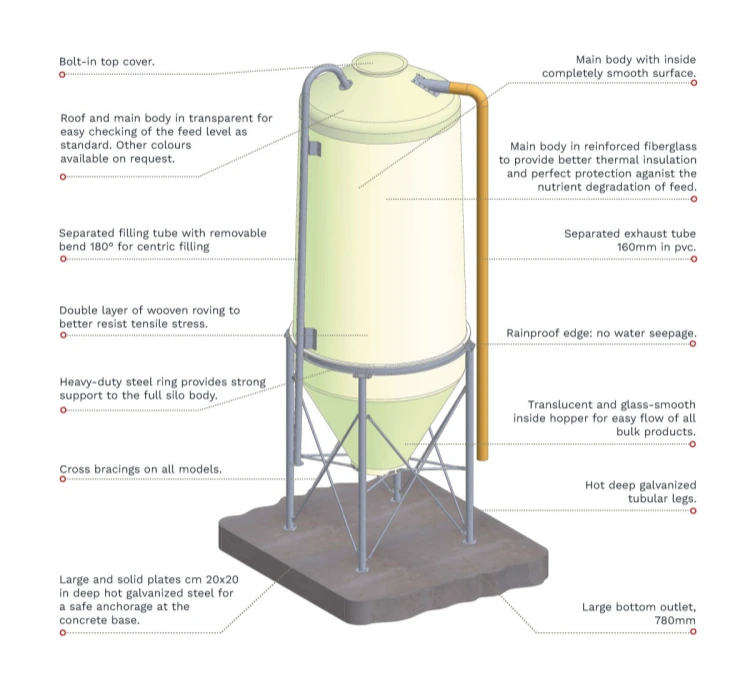
The fiberglass feed silo is used as a bulk feed storage unit within an automatic feeding system.
A typical installation consists of:
Feed Delivery → Fiberglass Feed Silo → Feed Outlet → Auger → Animal House
The silo stores dry feed close to the livestock or poultry houses and provides a controlled feed supply to the downstream conveying system.
Compared with conventional metal silos, fiberglass provides a non-metallic storage body with high corrosion resistance. This makes it particularly suitable for farms where humidity, washing, coastal air, or corrosive conditions are important considerations.
The final silo configuration depends on the required storage capacity, animal house layout, feeding system, installation height, and site conditions.
Fiberglass Construction and Corrosion Resistance
Fiberglass-reinforced material does not rust like steel. This makes it suitable for farm environments where prolonged exposure to moisture or corrosive conditions can increase the maintenance requirements of metal equipment.
The smooth internal surface also supports feed discharge and reduces the amount of feed that can remain on rough or heavily jointed internal surfaces.
The exterior gelcoat finish provides additional protection against normal outdoor UV and weather exposure.
For coastal farms, high-humidity poultry houses, pig farms, and other corrosion-sensitive locations, fiberglass can be considered as an alternative to galvanized steel.
Actual service performance depends on the material specification, installation conditions, environmental exposure, loading, and maintenance of the complete silo system.
Fiberglass vs. Galvanized Steel Feed Silo
Both fiberglass and galvanized steel silos are widely applicable to poultry and livestock feeding systems. The appropriate material depends on the farm environment, capacity, structural requirements, maintenance expectations, and project budget.
| Consideration | Fiberglass Feed Silo | Galvanized Steel Feed Silo |
|---|---|---|
| Main material | Fiberglass-reinforced material | Hot-dip galvanized steel |
| Corrosion | High resistance to rust and corrosion | Corrosion protection provided by zinc coating |
| Humid environment | Suitable for high-humidity conditions | Suitable with appropriate coating and maintenance |
| Coastal environment | Suitable where corrosion resistance is important | Specification should consider salt exposure |
| Internal surface | Smooth fiberglass surface | Galvanized steel surface |
| Thermal conductivity | Lower than steel | Higher than fiberglass |
| Structural system | Fiberglass body with designed support structure | Steel panels and steel support structure |
| Capacity | 4–100 m³, depending on model | Broad range of standard and customized capacities |
| Maintenance | No routine repainting required for the fiberglass body | Periodic inspection of galvanized surfaces and structural components |
| Typical application | Corrosion-sensitive and humid farm environments | Standard farm installations and projects requiring steel construction |
Fiberglass can be considered when corrosion resistance and reduced maintenance of the silo body are important.
Galvanized steel can be considered when standardized steel construction, structural requirements, or specific capacity ranges are the main priorities.
The final selection should be based on the actual farm conditions and feeding system rather than material preference alone.
Where budget or very large capacity leads, the galvanized steel feed silo covers a broader standardized capacity range at a lower cost per ton.
Capacity and Configuration
Silo capacity should be selected according to the farm’s actual feed consumption and delivery schedule.
The main factors include:
- Number of animals
- Animal type
- Daily feed consumption
- Feed delivery frequency
- Required storage days
- Number of animal houses
- Number of feeding lines
- Available installation space
- Required outlet height
- Local wind and environmental conditions
The silo can be configured according to these requirements rather than selected only from a standard capacity list.
For a project quotation, the required capacity can be provided in tons or cubic meters. If the required capacity has not yet been determined, animal numbers, daily feed consumption, and required storage days can be provided for technical evaluation.
Feed Level Monitoring and Access
Feed level monitoring can be added according to the requirements of the automatic feeding system.
Available components may include:
- Feed level sensor
- Inspection port
- Access ladder
- Safety cage
The sensor type and installation position should be coordinated with the farm’s feeding control system.
An inspection opening can also be used for visual checking of the feed level and internal condition.
Applications
The fiberglass feed silo is designed for dry feed storage in animal production facilities.
Poultry Farms
Suitable for broiler, layer, and breeder farms using bulk feed delivery and automatic feeding lines.
Pig Farms
Used for centralized dry feed storage before feed is transferred to pig houses through an auger feed delivery system or other conveying system.
Livestock Farms
Suitable for livestock operations requiring bulk feed storage as part of an automatic or semi-automatic feeding system.
Corrosion-Sensitive Farm Environments
Fiberglass is particularly suitable for farms where high humidity, coastal exposure, frequent washing, or other environmental conditions make corrosion protection an important equipment consideration.
Suitable dry feeds may include common poultry and livestock mash or pellet feeds. Feed characteristics should be confirmed when selecting the outlet and conveying configuration.
Export Supply
The fiberglass feed silo can be supplied for complete overseas poultry and livestock equipment projects.
The supply scope can be confirmed according to the selected model and may include:
- Fiberglass silo body
- Upper cover
- Lower cone
- Support structure
- Feed outlet
- Inspection port
- Access ladder
- Safety cage
- Feed level sensor
- Connection components
- Installation drawings
- Component list
Export packing and container loading arrangements can be discussed according to the silo dimensions and shipment requirements.
For complete farm projects, the silo can also be coordinated with the automatic feeding line and other feeding equipment.
Configuration Information
For a correct fiberglass feed silo recommendation, please provide the following information:
1. Feed Type
For example, poultry mash, poultry pellet, pig feed, or other dry compound feed.
2. Farm Size
Animal type and number of animals help determine the expected daily feed consumption.
3. Required Storage Capacity
Provide the required capacity in tons or cubic meters, if already known.
If not, provide daily feed consumption and required storage days.
4. Feeding System
If an automatic auger or other conveying system has already been selected, provide the relevant connection dimensions.
5. Installation Conditions
Provide the installation country, approximate location, available space, and relevant climate or environmental conditions.
6. Required Accessories
Specify whether you require a feed level sensor, ladder, safety cage, inspection port, single outlet, double outlet, or other components.
Based on this information, we can confirm the suitable silo capacity, dimensions, outlet arrangement, support structure, accessories, and quotation.
FAQ
What is the difference between fiberglass and galvanized steel feed silos?
Fiberglass provides high resistance to rust and corrosion and can be useful in humid or corrosion-sensitive farm environments.
Galvanized steel provides a conventional steel construction with zinc-coated surfaces and is widely used for poultry and livestock feed storage.
The appropriate choice depends on the farm environment, required capacity, structural requirements, feeding system, and project budget.
Can the fiberglass silo be used for poultry and pig feed?
Yes.The silo is designed for dry feed storage in poultry, pig, and livestock production systems.
Mash and pellet feeds can have different flow characteristics, so the feed type should be confirmed when selecting the outlet and conveying configuration.
Can the fiberglass feed silo be connected to an auger?
Yes.The lower feed outlet can be configured for connection to an automatic auger feeding system.
If the feeding line has already been selected, provide the relevant connection dimensions so the silo outlet can be matched to the system.
Can the silo capacity be customized?
Yes.Capacity, outlet position, support structure, sensor configuration, access components, and connection components can be reviewed according to the farm design.
Is fiberglass suitable for coastal or high-humidity farms?
Fiberglass is particularly suitable for applications where corrosion resistance is an important consideration.
It does not rust like steel and can therefore reduce corrosion-related maintenance of the silo body.
The support structure, fasteners, foundation, and anchoring system should still be selected according to the site environment.
Does the fiberglass silo require maintenance?
The fiberglass body does not require routine repainting for corrosion protection.
Normal inspection of the support structure, fasteners, anchor points, access components, and feeding connections is still recommended as part of farm equipment maintenance.
What is the expected service life?
The expected service life can be approximately 25 years under normal operating and outdoor installation conditions, subject to the actual material specification, environmental exposure, loading conditions, installation quality, and maintenance of the complete system.
The fiberglass body does not require routine repainting for corrosion protection.
Can the silo be installed outdoors?
Yes.Outdoor installation is possible when the foundation, support structure, anchoring, drainage, and local environmental conditions are properly considered.
Can a feed level sensor be installed?
Yes.A feed level sensor can be supplied and installed according to the requirements of the automatic feeding system.
The sensor type and installation position should be confirmed before production.
Do you provide installation drawings?
Yes.Installation drawings and component lists can be supplied according to the confirmed silo model and project configuration.