Gas Brooder Heater for Poultry
The SUNFLOWER infrared gas brooder provides radiant heat for chicks during the brooding stage — broiler, layer, breeder, and other floor-raised poultry. Rated output is 6.5 kW, and the heater runs on LPG or natural gas depending on the model, matched to your local gas supply.
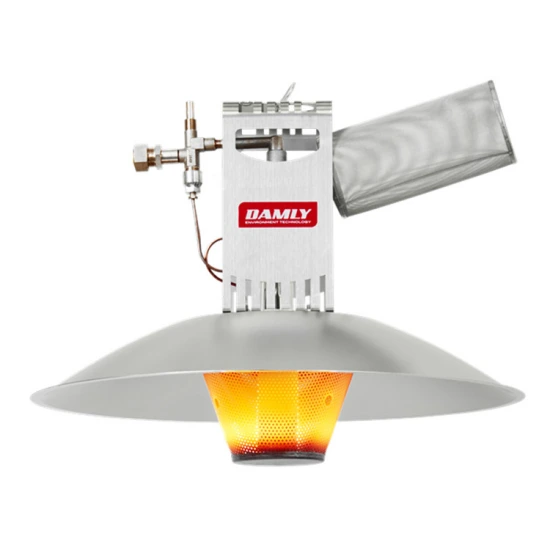
Three models cover manual and thermostatic operation, and one zone controller can manage up to 20 brooders in a larger house.
The Three Models
| DO6500L | DO6500L+ | DO6500N | |
|---|---|---|---|
| Gas type | LPG | LPG | Natural gas |
| Ignition | Manual | Manual | Manual |
| Temperature control | None — manual gas adjustment | Built-in thermostat, two-stage | None — manual gas adjustment, or zone controller |
| Best for | Small flocks, simple setups | Set-and-forget single-house brooding | Houses on natural gas supply |
How the two-stage thermostat works: you set the temperature on the unit. Below the setpoint the brooder runs at full output; above it, the brooder drops to minimum flame. The cycle repeats automatically — no daily flame adjustment.
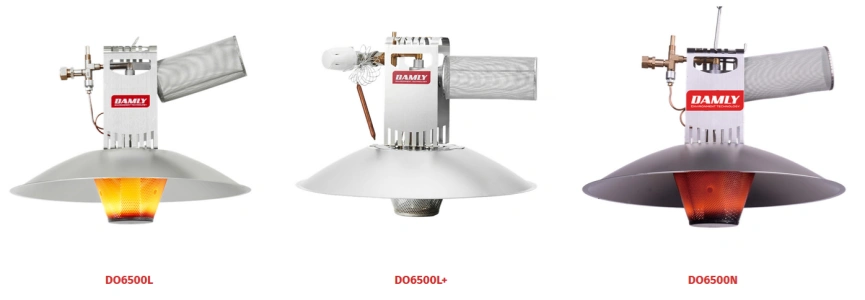
Zone control for larger houses: one controller manages 1–20 SUNFLOWER brooders, so a whole brooding zone follows a single temperature setting. Confirm the controller configuration with your house layout when ordering.
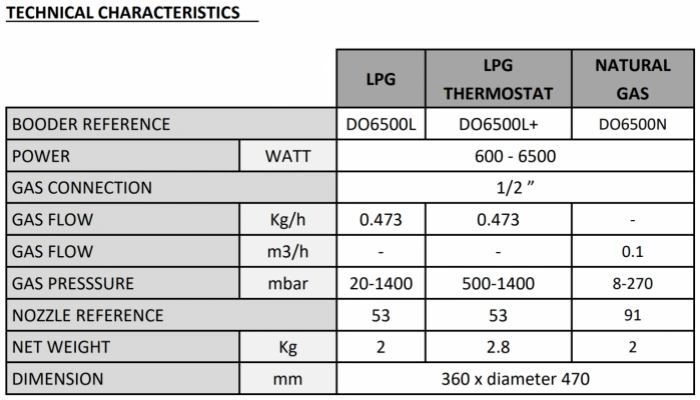
Key Specifications
How Radiant Brooding Works
The burner heats the refractory surface, which radiates infrared energy downward to the floor — warming the chicks and the litter directly, not the air volume of the house. This is why the brooder heats up quickly and why the house air temperature can run lower than with whole-house hot air heating: the chicks feel the floor-level warmth even at a lower air setpoint.
Radiant floor warmth also helps dry the litter surface in humid climates.
Construction
- AISI 304 stainless steel chassis — the reflector and body resist the corrosion of a humid brooding house.
- Refractory stainless steel burner — the radiant surface that carries the heat down to the brooding circle.
- Safety gas valve with thermocouple — the thermocouple senses the flame; if the flame goes out, the valve shuts off the gas.
- Integrated gas control system for start-up and flame management.
- Air filter on the unit.
The base models ignite manually and the safety valve operates on the thermocouple’s signal — no electrical connection is required for the heater itself (confirm — relevant for farms without reliable power). The zone controller option requires power.
Safety
- Gas piping, pressure regulation, ventilation, ignition, and flame protection must be checked before first operation.
- Installation and commissioning by qualified personnel, in accordance with local gas regulations and the manufacturer’s instructions.
- Combustion air and minimum ventilation rates must be part of the brooding plan — we confirm requirements against your house design.
- The thermocouple flame-failure protection shuts the gas valve if the flame is lost.
Applications
- Brooding in broiler, layer, and breeder floor houses
- Small and large flocks — single brooders through 20-unit zones on one controller
- Houses on LPG cylinder supply or natural gas line, by model
- Sites where whole-house heating is unnecessary or too costly — spot-heating the brooding circle only
Installation and Use
- The brooder hangs above the brooding circle; suspension height sets the spread and intensity of warmth on the floor.
- Judge the height by chick behavior: evenly spread chicks are comfortable; huddling under the brooder means too little heat or too high; avoiding the center means too much heat or too low.
- Reflector design distributes radiant energy across the brooding area rather than a narrow spot.
FAQ
LPG or natural gas — which model do I need?
Match the model to your gas supply: DO6500L and DO6500L+ run on LPG, DO6500N on natural gas. The burner is specified for one gas type — do not convert between gases without factory confirmation.
Does it need electricity?
The heaters ignite manually and the safety valve runs on the thermocouple signal, so the brooder itself operates without an electrical connection. The optional zone controller requires power.
How many chicks does one brooder cover?
That depends on climate, house insulation, season, and brooding layout. Send your house details and we calculate the quantity and layout of brooding circles.
What happens if the flame goes out?
The thermocouple detects flame loss and the safety valve shuts off the gas supply.
How much gas does it use?
Consumption depends on output setting and ambient conditions. Rated-condition figures are listed in the specification table — we estimate daily consumption against your climate and brooding plan.
Can I control multiple brooders from one point?
Yes — one controller manages up to 20 brooders in a zone. Useful in larger houses where you don’t want to adjust each unit separately.