
Plasson-Style Automatic Bell Drinker
The Plasson-style automatic bell drinker supplies open drinking water to floor-raised poultry — broilers, breeders, ducks and turkeys. A valve in the suspension stem refills the pan as birds drink and shuts off at the set water level. The drinker runs on line water pressure alone — no power connection, no control unit.
Order drinkers only to add to an existing line, or a complete drinking line with water pipes, pressure regulator, suspension wire and winch.
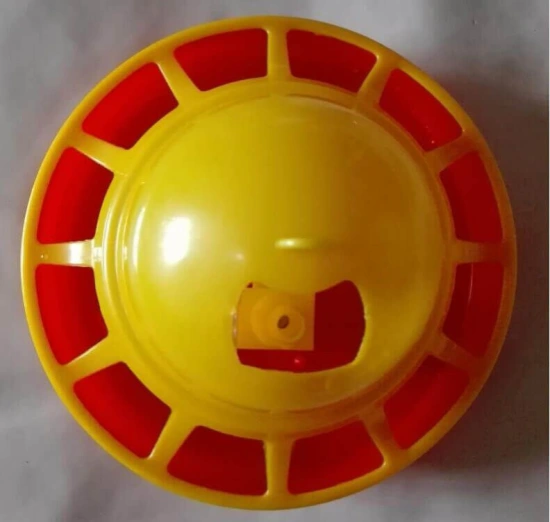
Key Features
- Automatic valve control. Water enters through the suspension stem. The valve opens when the pan level drops and closes at the set level, so the water depth stays constant without manual filling.
- No electricity required. The drinker operates on water pressure only — suitable for farms with unreliable power supply.
- Open water surface. Visible water helps day-old chicks locate the drinker and start drinking quickly — useful in the first week before birds transfer to nipple lines.
- 360° drinking access. Birds drink around the full pan rim, so each unit serves more birds than a one-sided trough.
- Adjustable water level. Set the valve for shallow water when starting chicks and deeper water as birds grow.
- Tool-free cleaning. The pan separates from the valve assembly for washout. There are no filters or electrical parts to service.
- Suspended mounting. Hangs from a drinking-line wire or rope. Raise the line as the flock grows so the pan rim sits at bird-back height.
- Optional accessories. Anti-perch spikes and overflow-control components available on request.
Key Specifications
| Item | Specification |
|---|---|
| Type | Automatic hanging bell drinker |
| Valve | Automatic shut-off in suspension stem; water level adjustable |
| Suspension stem | Steel |
| Water supply | Low-pressure line; pressure regulator included with complete drinking lines |
| Mounting | Suspended from drinking-line wire or rope |
| Application | Floor-raised broilers, breeders, ducks, turkeys |
How It Works
Water flows from the supply line through the suspension stem into the pan. The valve senses the water level: when birds drink and the level drops, the valve opens and refills the pan; at the set level it closes. One adjustment sets the water depth for the whole drinking cycle.
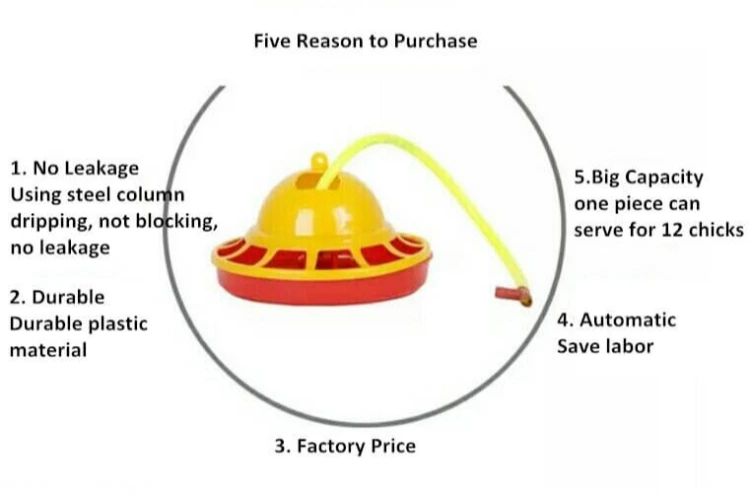
The unit must hang level. A hanging point out of level causes uneven water depth in the pan and continuous dripping from the valve.
System Compatibility
The drinker connects to a low-pressure drinking line. We supply the full set when needed: water pipes, pressure regulator, suspension wire, winch and height-adjustable hangers — the same components used in our poultry drinking line system. It can also run as a standalone set from a header tank, or sit alongside existing nipple lines as supplementary drinking points.
Bell Drinker vs Nipple Drinker
We manufacture both. The right choice depends on flock type and litter management:
| Factor | Bell Drinker | Nipple Drinker |
|---|---|---|
| Water presentation | Open surface in a pan | Drop released when bird pecks the pin |
| Starting day-old birds | Easier — visible water attracts chicks | Chicks need training; drip cups recommended for first days |
| Litter condition | Some spillage; manage litter under and around drinkers | Drier litter when height and pressure are set correctly |
| Water hygiene | Open water exposed to dust and feed; pan needs regular washout | Closed line keeps water cleaner between flushes |
| Cost per drinking point | Lower | Higher — line, regulator, nipples, risers |
| Best for | Breeder and waterfowl flocks, chick starting, low-budget setups | High-density broiler houses, dry-litter programs |
Many broiler farms run both: bell drinkers for the starting period, nipple lines as the main system through grow-out.
Applications
- Broiler grow-out floors — starting period and full-cycle where open water is preferred
- Breeder floor houses
- Duck and turkey floors — the open water surface suits waterfowl
- Supplementary drinking points in houses with nipple lines
- Farms in regions with unstable power supply — the drinker needs no electricity
Installation and Site Requirements
- Suspend from drinking-line wire or rope; keep the unit level.
- Set the pan rim at bird-back height and raise the line as the flock grows.
- Install a pressure regulator between the main water supply and the drinker line. We confirm the required inlet pressure against your water source.
- Spacing and quantity: we calculate the number of drinkers from your flock size, bird species and house dimensions.
Export Supply and Packing
Drinker units are compact and pack into standard export cartons with components nested to save container volume. Complete drinking lines are packed as pipe bundles plus component cartons. Packing lists, volumes and weights are confirmed with each order.
FAQ
What is a Plasson-style bell drinker?
A hanging automatic waterer with a bell-shaped pan and a valve that keeps the water level constant. “Plasson-style” refers to the established bell-drinker construction that has become the industry standard for floor-raised poultry.
How is it different from a nipple drinker?
The bell drinker offers an open water surface; the nipple drinker releases water when a bird operates the pin. Bell drinkers are simpler to start birds on but need more attention to cleaning and litter management. See the comparison table above.
How many birds does one drinker serve?
This depends on species, bird weight, climate and drinking space allowance. Send your flock numbers and house layout — we calculate the quantity and spacing for your project.
Is it suitable for automatic poultry houses?
Yes. It installs on an automatic drinking line with pressure regulation and suspension components, and can run alongside nipple lines.
Does it need electricity?
No. The valve operates on water pressure only.
Can I use it for ducks?
Yes. The open water surface works well for waterfowl, where nipple drinkers are less suitable.
What about hot climates?
The automatic valve keeps up with higher water consumption in hot weather. Check water freshness more often in dusty conditions — the pan is open, so daily inspection is good practice in high-heat, high-dust regions.